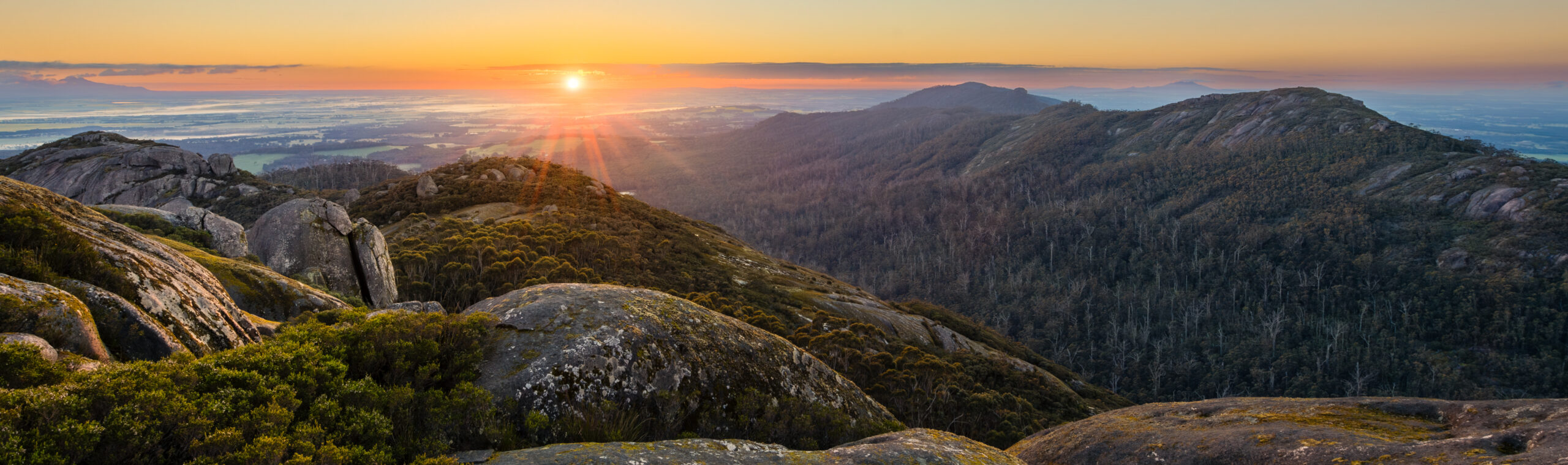
The Porongurup Range is approximately 16 km long, 4 km wide and encompasses 13 prominent granite peaks. These peaks were formed over 1500 million years ago when molten magma below the Earth’s surface cooled, forming the granite. Subsequent uplifting and erosion of the softer surrounding soils have exposed and weathered these granite peaks to form the fascinating rock formations that dominate this range today. Formed in the Precambrian Period, this range lays claim to being among the oldest ranges in the world.
Several climatic changes in the area, including a time about ten million years ago when a shallow sea covered most of the surrounding plain, have contributed to the formation of an ‘island’ rich in flora and fauna.
A remnant of the vast karri forest that once covered most of the south-west of Western Australia still thrives on the moist upper slopes of the range and is one of the few remaining pockets of karri to be found outside the main forest further to the west.
Jarrah and Marri trees also thrive in the deep, rich loam of the lower slopes and play host to over 500 species of flora, some of which, like the Ornduffia calthifolia, are unique to the area.
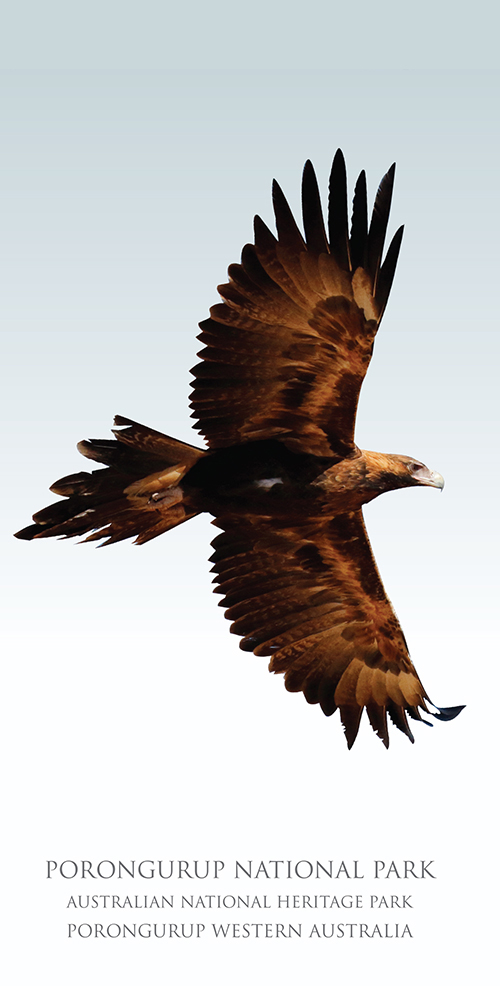
The abundant flora and cool climate have attracted many species of birds to the range, including several species of parrot, honeyeaters, robins, treecreepers, wrens, chats, hawks, white-tailed black cockatoos and the magnificent wedge-tailed eagle, to name just a few.
The imposing rock formations and abundant flora and fauna have contributed to making the area a popular destination for bushwalkers, birdwatchers and photographers. There are many trails throughout the range that provide easy access to some of the more spectacular features.
Now protected as a national park, the range and all its beauty will be preserved for future generations to enjoy.
Porongurup National Park
Porongurup National Park, recognised for its natural history, ecological significance and exceptional conservation value, has been set aside to be preserved as a national treasure. Porongurup National Park was placed on Australia’s Heritage List on 4 August 2009.
Porongurup National Park is managed by the Department of Biodiversity, Conservation and Attractions (DBCA). Follow these links to learn more about the National Park:
Explore Parks WA – Porongurup National Park
Trails WA – Porongurup National Park
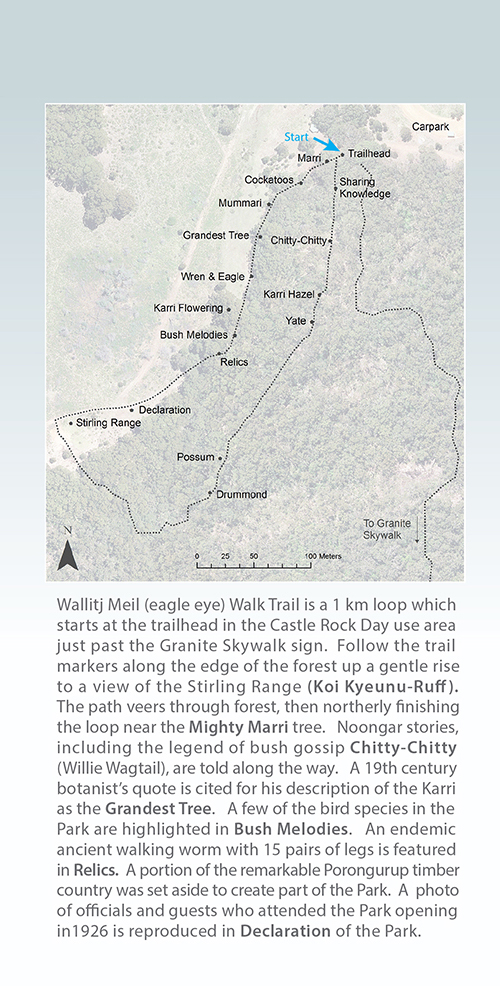
Walitj Meil Walk Trail
Biodiversity Hotspot
The unique ecosystem and habitat of the Park and its environs are recognised as a biodiversity hotspot with over 700 species of flora, including the rare and endangered Ornduffia calthifolia and fine-leaved Apium prostratum subsp. Porongurup Range, 300 macrofungi and 15 lichen species.
The Park provides habitat for threatened cockatoos: the endangered short-beaked Carnaby, Calyptorhynchus latirostris; the long-beaked Baudin C. baudinii; and the vulnerable forest red-tailed black cockatoo, Calyptorhynchus banksii naso. The granite outcrops create a damp refuge for Gondwanan relict species; Porongurup National Park is nationally recognised for its diversity of spiders, in particular primitive trapdoor spiders.
Challenges
The Porongurup Range and its surroundings face a number of challenges, including:
- Climate change
- Weed and disease control
- Excessive traffic and litter
- Feral animals and protection of native wildlife
- Mining proposals
- DBCA and local government commitment
- Continuing local interest and involvement
The Porongurup Friends are proud to support the preservation and conservation of the Porongurup Range and demonstrate our concern when incompatible use is considered.